
What if molds could design themselves? One company is creating a new model for how tooling gets engineered — aiming to make the mold less of a bottleneck in plastics manufacturing.
The future of manufacturing isn’t coming — it's here — and we have four reasons why:
Atomic was founded by CEO Aaron Slodov, who entered manufacturing from a software and startup background after experiencing how difficult it can be to source a mold shop, build a mold, and successfully produce parts. That firsthand frustration exposed how many inefficiencies are baked into traditional tooling workflows — and inspired Atomic’s mission to connect modern software thinking with high stakes manufacturing execution.
Atomic has built a multidisciplinary team that combines experienced manufacturing leadership with a serious software bench — including PhD-level mathematicians and engineers focused on advancing mold design methodology. Their R&D work targets high impact mold variables like cooling waterline routing, gate placement, ejection layout, and parting line decisions, while supporting a broader strategy to scale in-house production and help rebuild advanced manufacturing capacity in the U.S.
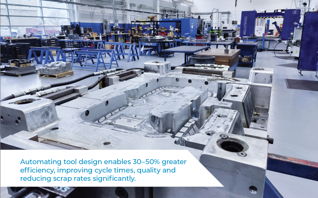
Atomic’s approach is designed to deliver a major step change in performance, aiming for molds that run 50% more efficiently, can be built 50% faster, and cost 50% less than conventional methods. The goal is not just incremental improvement, but a fundamentally different way to reduce lead time, eliminate rework, and boost productivity across the mold build and production process.
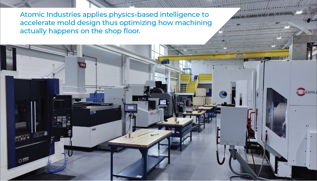
Atomic Industries is building a software driven system that can autonomously design and produce plastic injection molds, creating a new model for how tooling gets engineered. Instead of relying solely on traditional manual workflows and long iteration cycles, their approach uses automation to streamline key design decisions and accelerate mold readiness from concept to build.
The software doesn’t just design—it simultaneously develops manufacturing strategies. Lou Young, co-founder and head of manufacturing, says “As it designs a slide with a waterline system, it understands the machining requirements, the setup procedures and the sequence of operations needed to manufacture that component. This eliminates the traditional bottleneck where CAM programmers must analyze each tool design and develop individual manufacturing strategies,”
Get the full story on how Atomic Industries is using software to autonomously design and build injection molds, cutting time, cost, and complexity along the way.